NS Memorial Arnstein Monastery
A gravestone with a name, a grave for the nameless
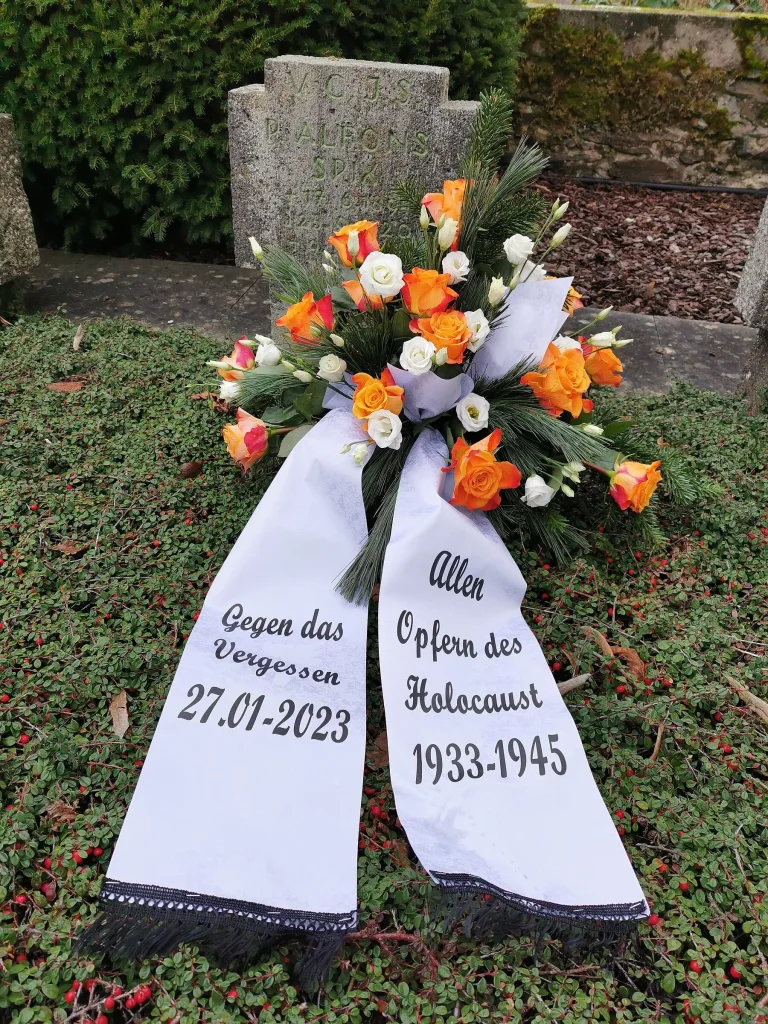
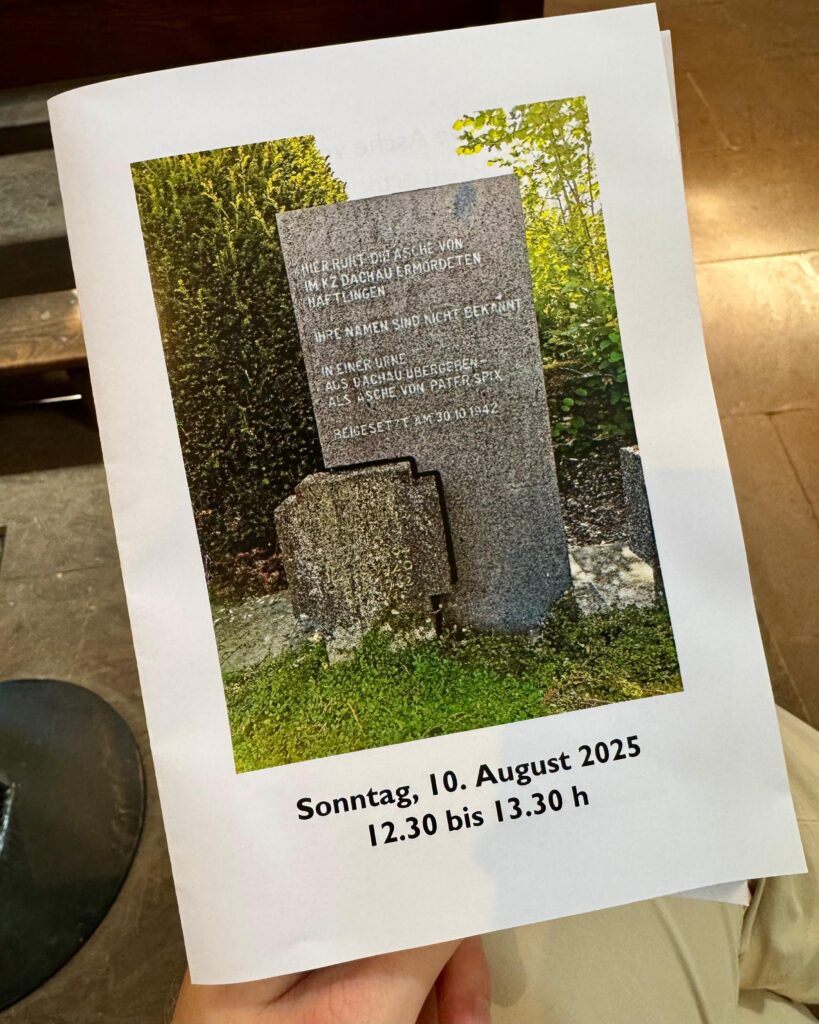
On 27 January 2023, all victims of the Holocaust were commemorated for the first time at the Arnstein Monastery Cemetery.
Why at this place?
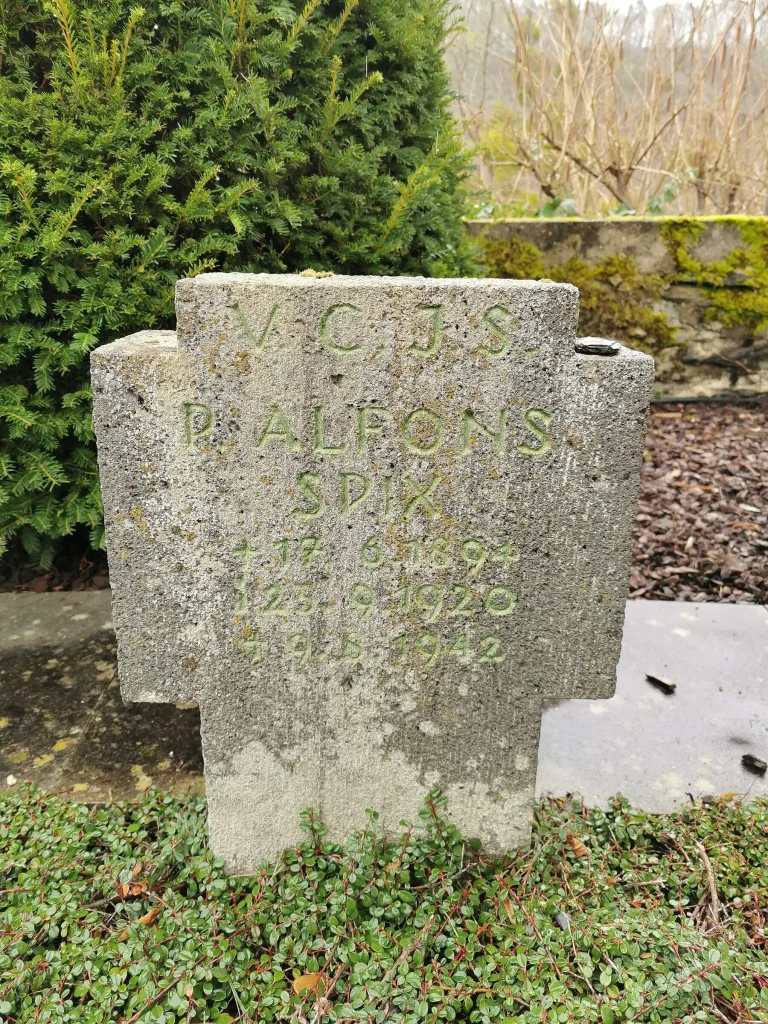
The gravestone bears the name of the head of the monastery, Father Alphons Spix sscc. Buried in his grave is the urn from the Dachau concentration camp containing the ashes of one or more concentration camp victims.
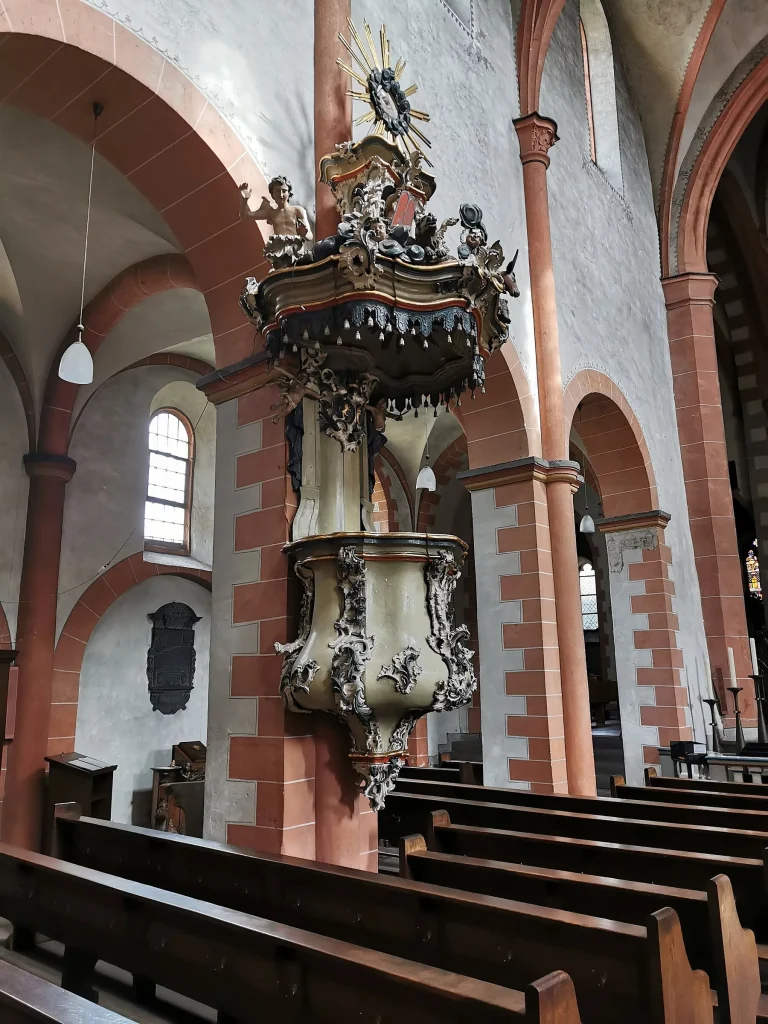
It was from this pulpit in the former Arnstein monastery church that Father Alphons Spix preached in November 1941. It was only then that he noticed that the Polish forced labourers from neighbouring Singhofen were once again taking part in the service. Father Spix had already been interrogated by the Gestapo for “Polish pastoral care”, as it was called in Nazi jargon. He had been strictly forbidden to continue caring for Polish believers as a pastor.
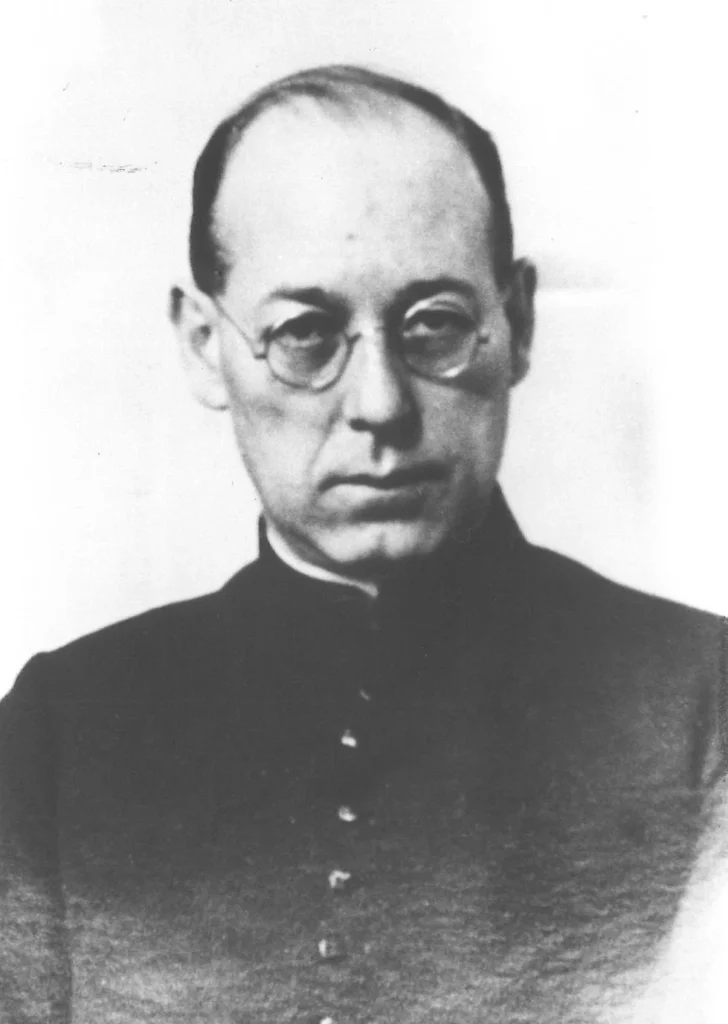
On 19 November 1941, Father Spix was arrested by the Gestapo. After three months in pre-trial detention in Frankfurt am Main, he was taken to the Dachau concentration camp near Munich on 29/30 January 1942.
All efforts by the religious community and the family to get him released were unsuccessful.
On 9 August 1942, Father Spix’s life ended in the sick barracks of the concentration camp. It is not clear whether he was killed there or died of an infection. The death certificate contains the usual phrase: heart and circulatory failure with intestinal catarrh.
The dead man was cremated in the crematorium, like all those killed or deceased in the concentration camp. If the family wanted an urn for burial, as we know from eyewitnesses, ashes and pieces of bone were swept up from the ground and filled into the urn. In the rarest of cases, the urn contained the ashes of the deceased.
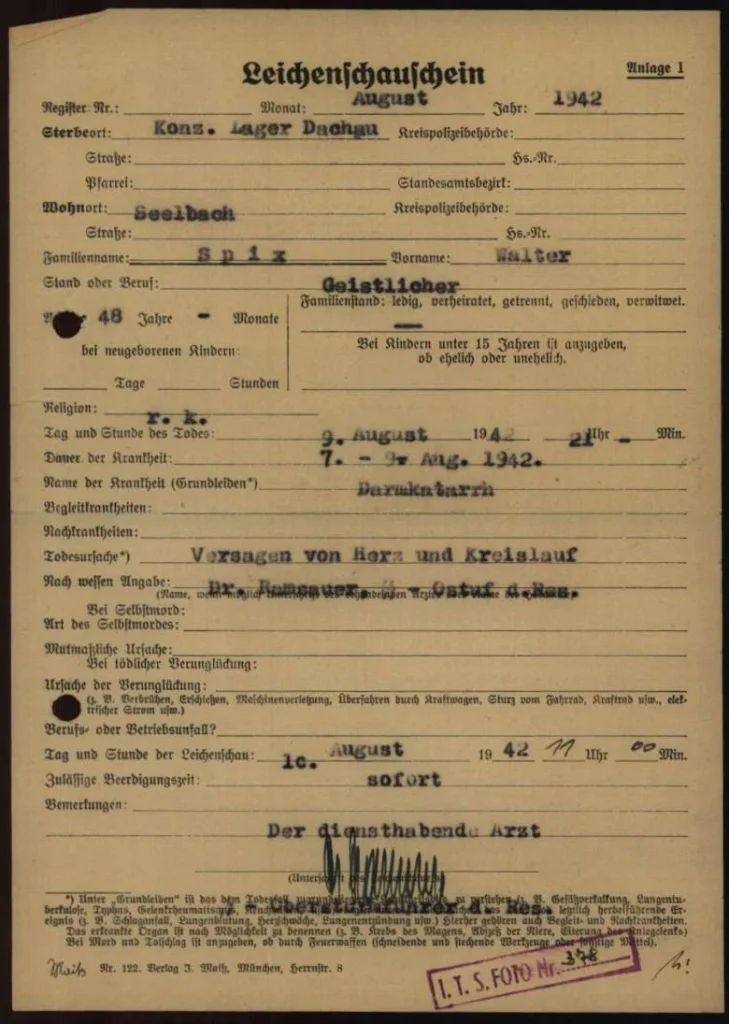
Thus wrote the Provincial Father Constans Dierker sscc in a circular letter in 1947:
“If they were not the last remains of the body of our dear deceased, they were most probably the last remains of some other victim of inhuman cruelty.”
On the grave itself there is neither a reference to the death of the priest in the Dachau concentration camp nor to the “last remains” of one or more victim(s) of the Nazi dictatorship buried in the grave.
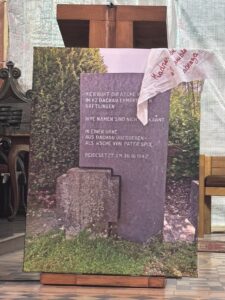
It was not until 1987 that the memorial plaque was inaugurated. In 2013, a stumbling stone was laid at the entrance to the church path. Meanwhile, a RollUp in the church also draws attention to the nameless victims in the grave.
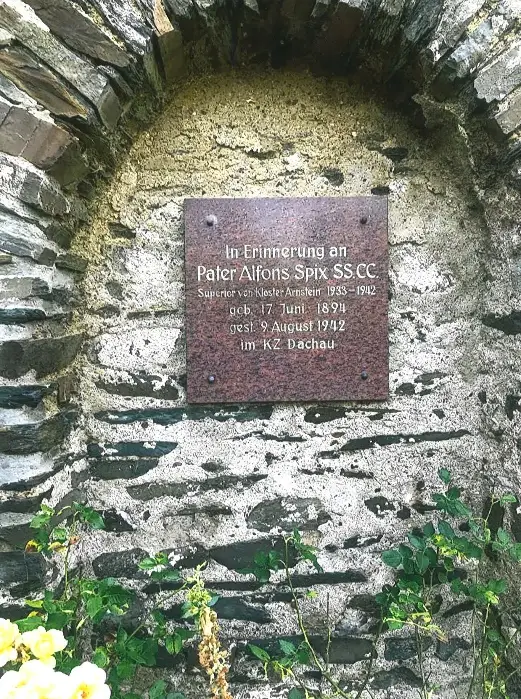
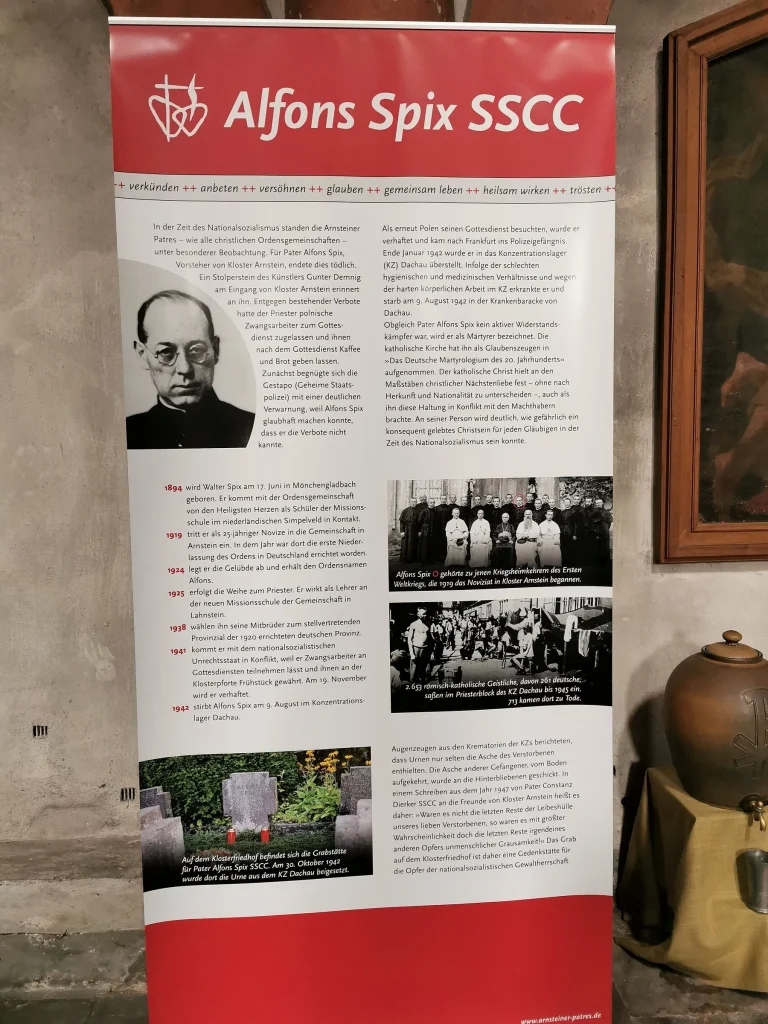
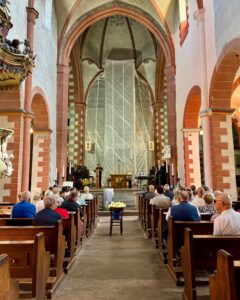
In the course of the extensive renovation of the church of St. Mary and St. Nicholas (former monastery church of Arnstein), a place of remembrance and commemoration is being planned in the church.
The Initiative NS-Gedenkstätte Klosterfriedhof Arnstein is a (founding) member of the association Erinnern & Gedenken in Rheinland-Pfalz – Landesarbeitsgemeinschaft der Gedenkstätten, Erinnerungsorte und Initiativen.
Text and photos: Stefan Diefenbach
Photo corpse certificate: Arolsen Archives/Bad Arolsen
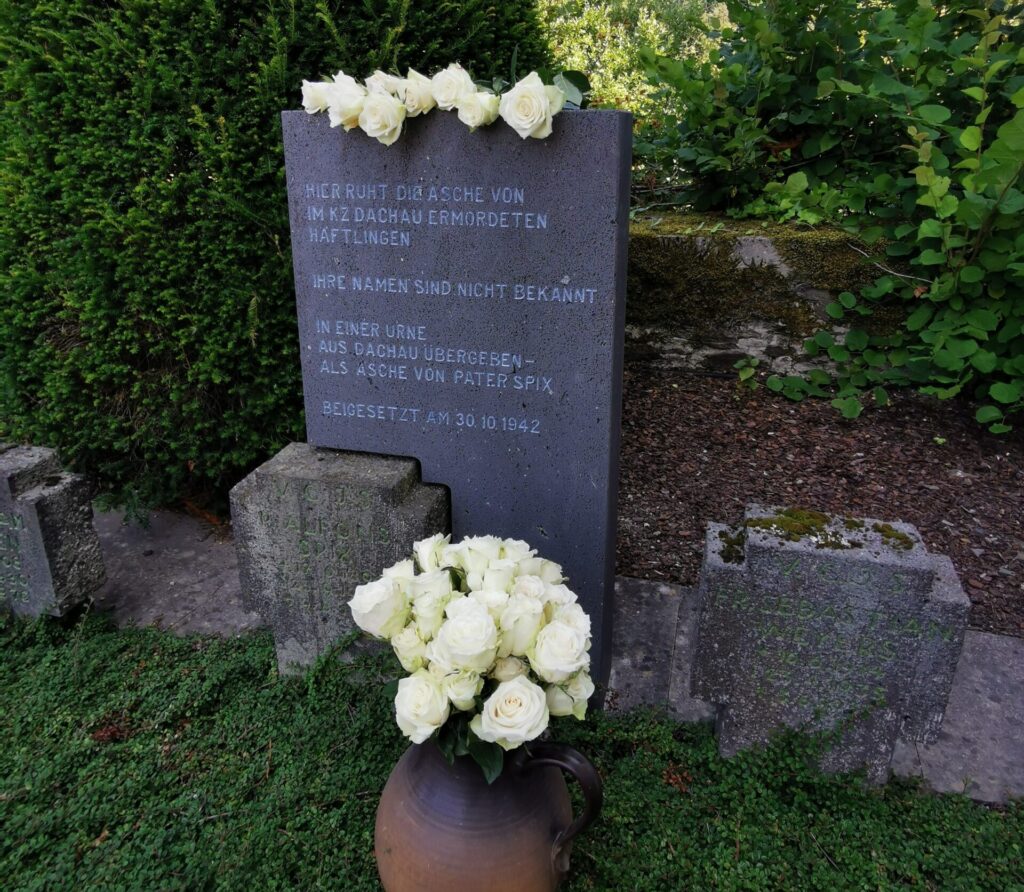
For decades, they were invisible – the inmates murdered in the Dachau concentration camp.
After the incineration of their corpses, their ashes were put into an urn with the inscription “Walter Spix” and sent to the family of the Arnstein Monastery superior.
It is not known where the ashes of Father Spix (died and incinerated on 9/10 August 1942) lie buried, any more than it is known whose ashes are really in the urn. Eyewitnesses reported that urns were filled with whatever ashes could be swept up from the floor of the respective concentration camp crematorium on a given day.
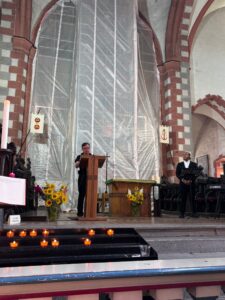
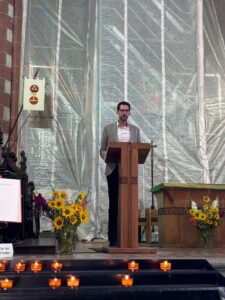
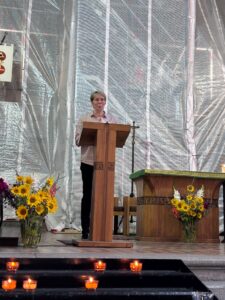
The stele was dedicated on 10 August 2025 in a moving ceremony in the former monastery church. The speakers agreed: the commemorative stele admonishes “Never again!” … may such crimes be allowed to happen. And “Now more than ever!” … are we called upon to stand up—once again—in defence of freedom and human rights.
The memorial ceremony speakers:
- Tanja Machalet, member of the German Federal Parliament
- Manuel Liguori, member of the Parliament of Rhineland-Palatinate, mayor of Nassau
- Jörg Denninghoff, administrator of the Rhine-Lahn district (address read by a representative)
- Franz-Josef Ratter, acting chairman of the association “Erinnern und Gedenken in Rheinland-Pfalz e.V.”
- Catharina Buschmann-Kramm, Diocese of Limburg, Westerwald Rhine-Lahn regional director
- Antje Dorn, Protestant pastor, Evangelical Church in Hessen and Nassau, Kördorf congregation
- Armin Sturm, Catholic priest, Diocese of Limburg, St. Martin-St. Damian Rhein-Lahn parish
- Monika Kahm, Arnstein local committee
Music:
- Walter Castillo, tenor (Argentina)
- Michael Reuter, piano
Text and Fotos: Stefan Diefenbach
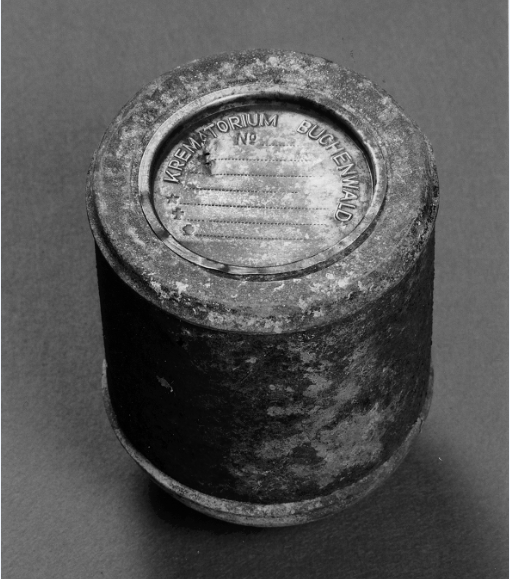
Copyright: Peter Hansen, Buchenwald Memorial Collection